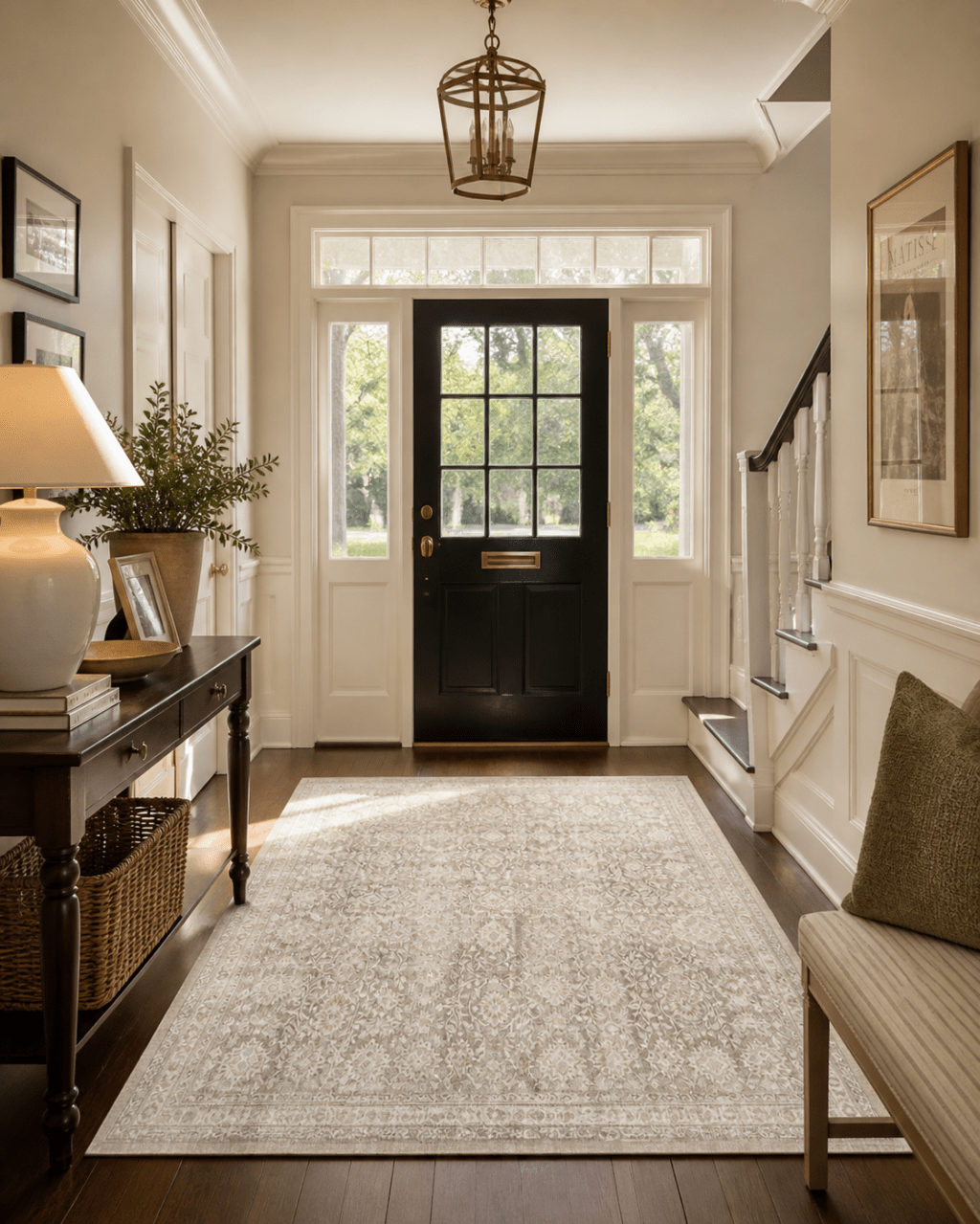
There’s a reason some homes feel welcoming the moment you step through the door, and it’s usually not because they’re perfectly spotless. It’s because the space feels calm, intentional, and easy to move through. The entryway quietly signals that the rest of the home is cared for — even on ordinary days when shoes pile up, umbrellas drip onto the floor, and life feels a little rushed. The truth is, a “clean-feeling” entryway has less to do with perfection and more to do with thoughtful choices that reduce visual clutter, hiding daily wear gracefully and making everyday habits easier.
Surprisingly, some of the biggest differences come from details most people overlook, such as the type of rug fiber, the height of the rug pile, and how materials age in high-traffic areas. Other factors include lighting that softens shadows, where keys naturally land, and whether decor creates breathing room or visual noise. A beautiful entryway should work with real life — not against it.
The entryway changes the feeling of your entire home. In fact, it’s one of the hardest-working spaces in the house. Just think about all it collects on a daily basis: dirt from shoes, pet hair, wet umbrellas, bags and coats, daily clutter, and seasonal messes. As the first visual impression of the home, when this area feels chaotic, the whole house often feels harder to maintain. But when the entryway feels organized and visually calm, the home immediately feels warmer and more welcoming — even before guests see another room.
That’s why the best entryways are designed around two goals: reducing visible mess and softening the transition into the home. The details below matter more than most people realize.
How to Choose the Right Rug for a High-Traffic Entryway
A rug can completely change how welcoming an entryway feels, but in high-traffic areas, the wrong rug quickly becomes frustrating. It traps dirt and shows every footprint. It holds gross pet odors. It can be difficult to vacuum. It slides around
and takes forever to dry after washing. Some of the prettiest rugs can look worn within months. The goal is finding a rug that hides real life gracefully while still feeling warm and elevated.
Low Pile Rugs Usually Work Best
For entryways, low pile rugs are almost always the most practical option. Dirt stays closer to the surface instead of sinking deep into fibers. Vacuuming becomes easier and faster. Doors open smoothly without catching the rug. Mud and moisture dry more evenly. Pet hair is easier to remove. The rug feels visually cleaner longer.
While very plush rugs can feel cozy in bedrooms or living rooms, in entryways they often trap debris and show traffic patterns quickly. A distinct advantage of a low pile, vintage-style rug is that it tends to age more gracefully in busy spaces.
The Best Rug Materials for Busy Entryways
Not all washable rugs perform the same. Some soften beautifully over time. Others become stiff, wrinkled, or difficult to clean after repeated washing. Overall, the best materials for entryways are polyester blends. They are a practical choice for homes with children, pets, or heavy foot traffic. They resist staining well, dry faster after washing, and hold printed vintage patterns beautifully. Often, they are softer underfoot than expected, and they are less likely to absorb odors deeply.
This makes them an especially good choice for muddy shoes and rainy climates. They are more suitable for cleaning after pet accidents, allowing for frequent washing.
Another rug material appropriate for entryways is polypropylene, one of the easiest materials to maintain.
It is extremely stain resistant, handles moisture well, durable for heavy traffic, easy to vacuum, and affordable for large spaces. It works best for front doors that get used consistently, homes with pets and kids because it offers practical everyday durability.
Finally, rugs made from cotton blends can feel softer and more natural visually. However, there are tradeoffs. These rug can wrinkle more easily. They may absorb stains faster, and they take longer to dry. They can flatten over time. These rugs are beautiful, but they can be better for lighter-traffic spaces or layered styling.
If Your biggest concern Is tracking dirt, the rug pattern you choose matters almost as much as the material. In this case, look for vintage or distressed patterns, medium-tone color variation,
muted earth tones, and layered designs that visually break up debris. It is best to avoid solid ivory rugs, extremely dark rugs that show dust, high contrast geometric patterns, and thick shag textures.
One of the reasons vintage-inspired rugs work so well in entryways is because they naturally camouflage everyday wear. They still feel elegant while hiding the reality of muddy shoes, dust, and traffic patterns.
Vacuuming Tips for Entryway Rugs
Vacuum 2–3 times weekly in heavy traffic seasons using suction without aggressive brush rolls if fibers are delicate. Rotate rugs occasionally to reduce visible wear paths. When possible, shake the rug outdoors before washing.
If Pet Odors Are the Concern
Some rugs trap odors much more aggressively than others. The better choices for homes with pets include
low pile construction made of polyester or polypropylene blends,
Washable rugs with thinner backing
usually dry quickly after washing. I sprinkle baking soda before vacuuming and wash smaller rugs before odors build deeply and let the rugs dry fully before placing back down. Using a rug pad that allows airflow underneath. The longer moisture sits inside thick fibers, the more difficult odors become to remove, which is why fast-drying materials matter more than most people think.
Before Buying a Washable Rug, Check Your Washing Machine Size
This is one of the most overlooked details. Many people buy “machine washable” rugs only to realize they barely fit inside a standard washer.
As a general guideline, 2×3 rugs and runners usually fit standard washers comfortably. 5×7 rugs may require a large-capacity washer. Larger rugs sometimes need commercial machines. Also consider that wet rugs become significantly heavier, and oversized rugs can stress home machines over time. Additionally, thick backing increases drying time.
For larger entryways, some people prefer smaller washable rugs layered strategically or washable runners. Durable non-washable rugs paired with regular vacuuming and spot cleaning can be a good choice depending on your needs.
The Reality
A beautiful entryway rug should make everyday life easier — not more stressful. The best choices are usually the ones that quietly handle real life well: muddy shoes, pets racing through the door, rainy afternoons, busy mornings, and all the small routines that happen without much thought. That’s why practicality matters just as much as appearance in a high-traffic space.
A low-pile rug that vacuums easily, dries properly after washing, and hides everyday wear gracefully will almost always feel more welcoming over time than something overly delicate or difficult to maintain.
And interestingly, the rugs that tend to feel the most timeless are often the ones designed with real life in mind from the beginning. Vintage-inspired patterns, layered color variation, softer textures, and durable materials don’t just make an entryway easier to clean — they help the space feel calmer, warmer, and more lived in.
Because ultimately, a welcoming home rarely feels perfect. It simply feels cared for.
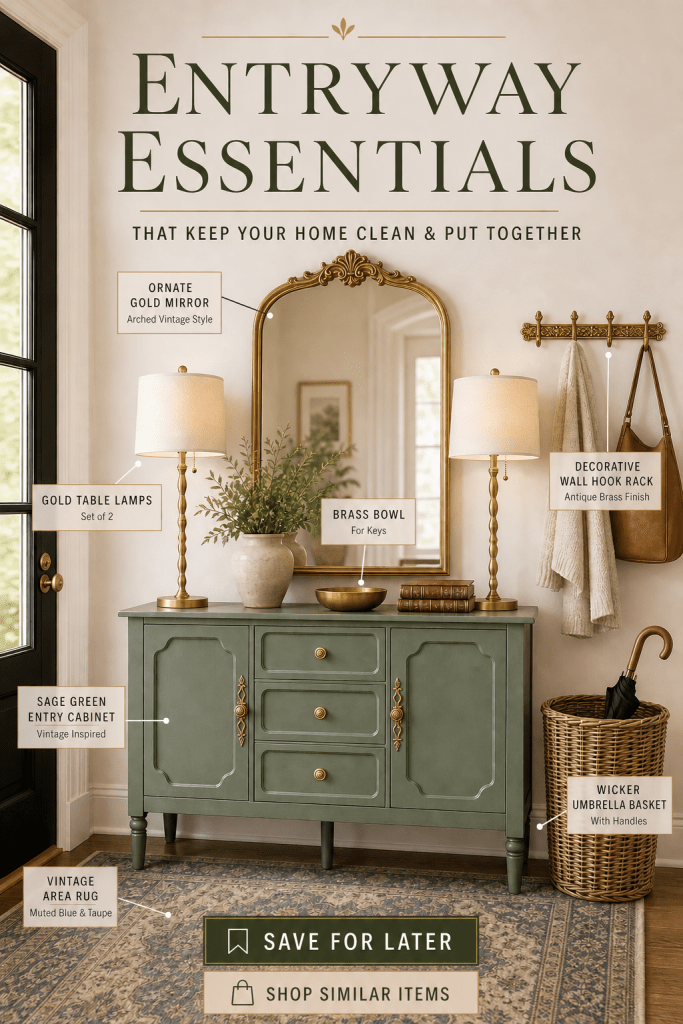
Click here to shop the entryway look you see below.
As an Amazon Affiliate, I earn commissions on qualifying purchases at now extra cost to you.


 Stories of Home | Char Beyond the Bell
Leave a comment