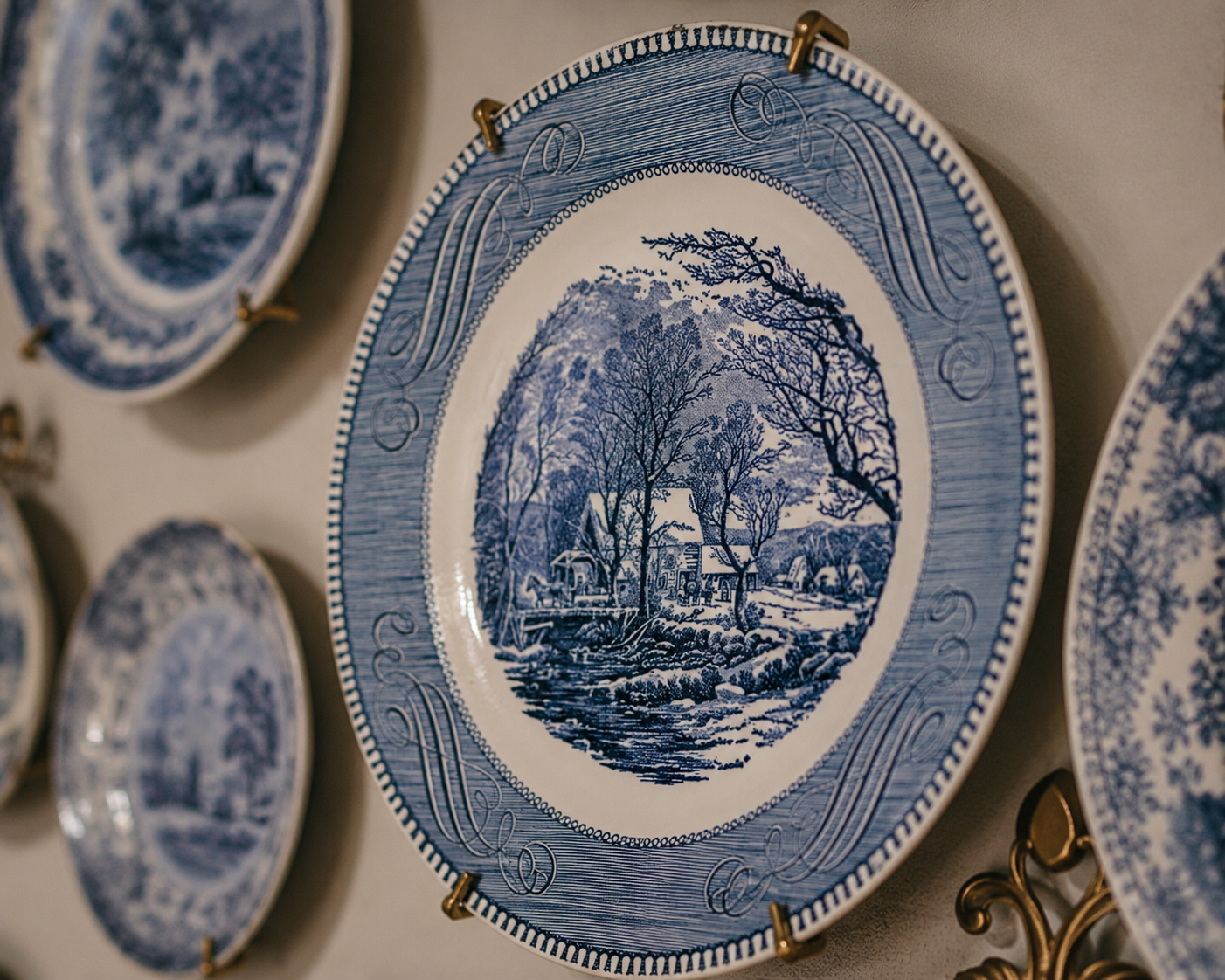
One of the most meaningful things in my home isn’t valuable, rare, or particularly impressive. It’s a Currier & Ives plate hanging on my wall. Ironically, it isn’t even my grandmother’s plate.
I don’t know what happened to her dishes—the ones that she used daily when I was young. Somewhere along the way, the blue and white Currier & Ives set that sat on her table for years disappeared. Maybe she gave them to a family member or friend. Maybe they were donated. Maybe they were broken. I honestly don’t know.
The plate hanging in my home today came from an antique store. I bought it because the moment I saw it, I wasn’t standing in that antique store anymore. I was back in my grandmother’s kitchen.
We spend a lot of time worrying about losing the people we love. What I didn’t understand when I was younger is that sometimes what we’re really afraid of losing are the ordinary moments we shared with them. The small details. The routines. The sights, sounds, and smells that seemed so commonplace at the time that we assumed we would always remember them.
Then the years pass. The memories soften around the edges. And suddenly an old plate becomes a doorway to the past.
My grandmother cooked like no other. I know practically everyone says that about someone they love, but I remain convinced she was the best. I grew up eating simple Appalachian meals, but my grandma had a way of making ordinary food feel special. Even though she had an electric stove in her kitchen, she continued cooking soup beans on top of an old coal stove that heated her house during the winter. The day before, she would sit and “look” the beans, sorting through them one by one, removing tiny rocks and any beans she didn’t think would cook up right. Then she soaked them overnight. The next morning, she started them early and let them cook all day. If I close my eyes, I can still smell them.
There was nothing quite like walking through her front door and being greeted by whatever she happened to be cooking that day. Usually there was a pone of cornbread baking in a cast iron skillet nearby. Like many Appalachian coal miners, my dad loved crumbling that cornbread into a glass of cold milk before bed, turning something simple into a treat.
Most of those meals were served on blue and white Currier & Ives dishes by Royal, a pattern called The Old Grist Mill. As a child, I spent countless meals staring at those plates. I would trace the decorative scrollwork around the rim with the corner of my fork while I ate. As the food disappeared, the winter scene in the center slowly emerged. Bare trees. Rolling hills. A grist mill beside the water.
To me, it never felt like some distant nineteenth-century landscape. It felt like home.
The mountains and leafless trees looked remarkably similar to the hills surrounding Mingo County, West Virginia, where my family lived. Looking back, I realize those dishes connected me to a sense of place long before I had words for it. When we’re children, we don’t separate home into categories. Home isn’t just a house. It’s the view outside the window, the smell coming from the kitchen, the sound of familiar voices, the sunlight falling across a table, and even the dishes we eat from every day. All of those things become woven together until they form our understanding of where we belong.
Those Currier & Ives scenes weren’t depicting southern West Virginia, but somehow they became part of my idea of it. Meal after meal, year after year, I studied those blue-and-white landscapes while sitting in my grandmother’s kitchen. Without realizing it, I was connecting those images to the people I loved, the food we shared, and the place I called home.
Perhaps that’s why seeing one of those plates still affects me all these years later. I didn’t buy the plate hanging on my wall because it matched my decor. I bought it because it matched a memory.
Those plates held some of my favorite meals. Homemade chicken and dumplins—yes, dumplins, not dumplings, if you grew up on Pigeon Creek. Biscuits and gravy. Homemade soups. “Kilt” lettuce and onions. Fried potatoes. Corned beef hash. Fried chicken. Fried apple pies. Almost everything came from a cast iron skillet and was served on top of that little blue-and-white grist mill.
I don’t know how my grandmother acquired her dishes. I’ve often wondered if they came through a grocery store promotion, as many Currier & Ives sets did during the middle of the twentieth century. Maybe she collected them piece by piece. Maybe they were a gift.
What I do know is that every time I see one, I’m transported. I’m sitting at her table again, eating Kellogg’s Corn Flakes from one of the bowls and reading every word printed on the cereal box. Sunlight streams through lace curtains hanging above the kitchen table. My grandmother whistles while she works. Coffee is brewing. Something wonderful is cooking.
Friends and family come and go throughout the day. She pauses for coffee breaks and conversation before returning to her endless list of chores. From sunup to sundown, she cared for her home and the people who entered it.
The house itself was small. The life lived inside it felt enormous. Looking back, I think that’s what made it feel like home. And that is why the plate hangs on my wall instead of sitting in a box. Every time I pass it, I’m reminded of moments I never want to lose. The older I get, the more grateful I become for physical reminders of the people who shaped me. Not because objects replace memories, but because they help preserve them.
Sometimes they even strengthen them. A plate becomes a story. A quilt becomes a person. A recipe card becomes a voice. An old dish hanging on a wall becomes a grandmother standing in her kitchen, whistling while soup beans simmer on a coal stove.
I think that’s why plate walls have become so meaningful to me. They’re not really about plates. They’re about the people who made them special. They are collections of stories disguised as collections of objects.
We often worry that the memories of the people we love will fade with time. The truth is that some of them probably do. But the objects they touched, used, displayed, and cherished have a way of carrying those stories forward. They remind us. They prompt conversations. They help us tell the next generation about the people who came before them.
One day, someone may look at the Currier & Ives plate hanging on my wall and wonder why I kept it. I hope they know it was never really about the plate. It was about a little house on Pigeon Creek, sunlight through lace curtains, soup beans simmering on a coal stove, and a grandmother who made ordinary days feel extraordinary.
And perhaps that’s the real purpose of the things we keep—not to hold on to the past, but to help pass it on.


Leave a Reply